
THE SECRET LANGUAGE OF WHALES – HOW THEY COMMUNICATE ACROSS OCEANS
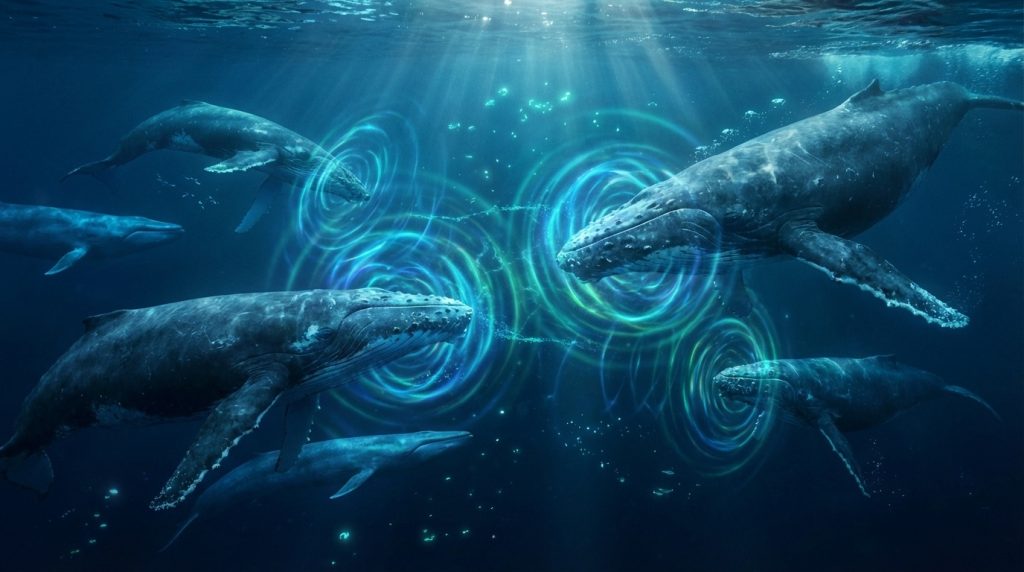
Marine biologists have long been fascinated by the remarkable ability of whales to communicate across vast oceanic distances using complex vocalizations commonly referred to as “whale songs.” These sounds—ranging from low-frequency moans and clicks to intricate, repeating melodic patterns—are produced primarily by species such as humpback, blue, and fin whales. Due to the efficient way sound travels underwater, some whale calls can propagate for hundreds, and in some cases thousands, of kilometres, making them one of the longest-range communication systems in the animal kingdom.
In species like humpback whales, songs play a critical role in social interaction, navigation, and mating behaviour. Males often sing elaborate, evolving songs during breeding seasons, possibly to attract mates or establish dominance. Beyond reproduction, whales also use vocal signals to maintain group cohesion, locate one another across murky waters, and coordinate movements during migration.
Recent scientific research has revealed that whale vocalizations offer more than behavioural insight—they can serve as a powerful indicator of ocean health. Changes in song structure, frequency, or timing may reflect disruptions in marine ecosystems caused by climate change, shifts in prey availability, or increasing human activity. In this sense, whales act as acoustic sentinels, providing scientists with valuable data on the changing state of the marine environment.
However, this intricate communication system is under growing threat from underwater noise pollution. Commercial shipping, seismic surveys, offshore construction, and industrial activities generate persistent noise that can mask whale calls, disrupt communication, increase stress levels, and even lead to strandings. Such disturbances interfere with essential behaviours like feeding, breeding, and migration.
This growing body of evidence underscores the urgent need to protect marine soundscapes as a critical component of ocean conservation. Reducing noise pollution through improved shipping practices, quieter technologies, and stronger regulatory frameworks is essential to safeguarding these natural communication channels. Protecting the “secret language” of whales is not only vital for their survival and well-being but also for maintaining the balance and resilience of marine ecosystems as a whole.
