
The Ocean’s Silent Heroes: Seagrass Meadows
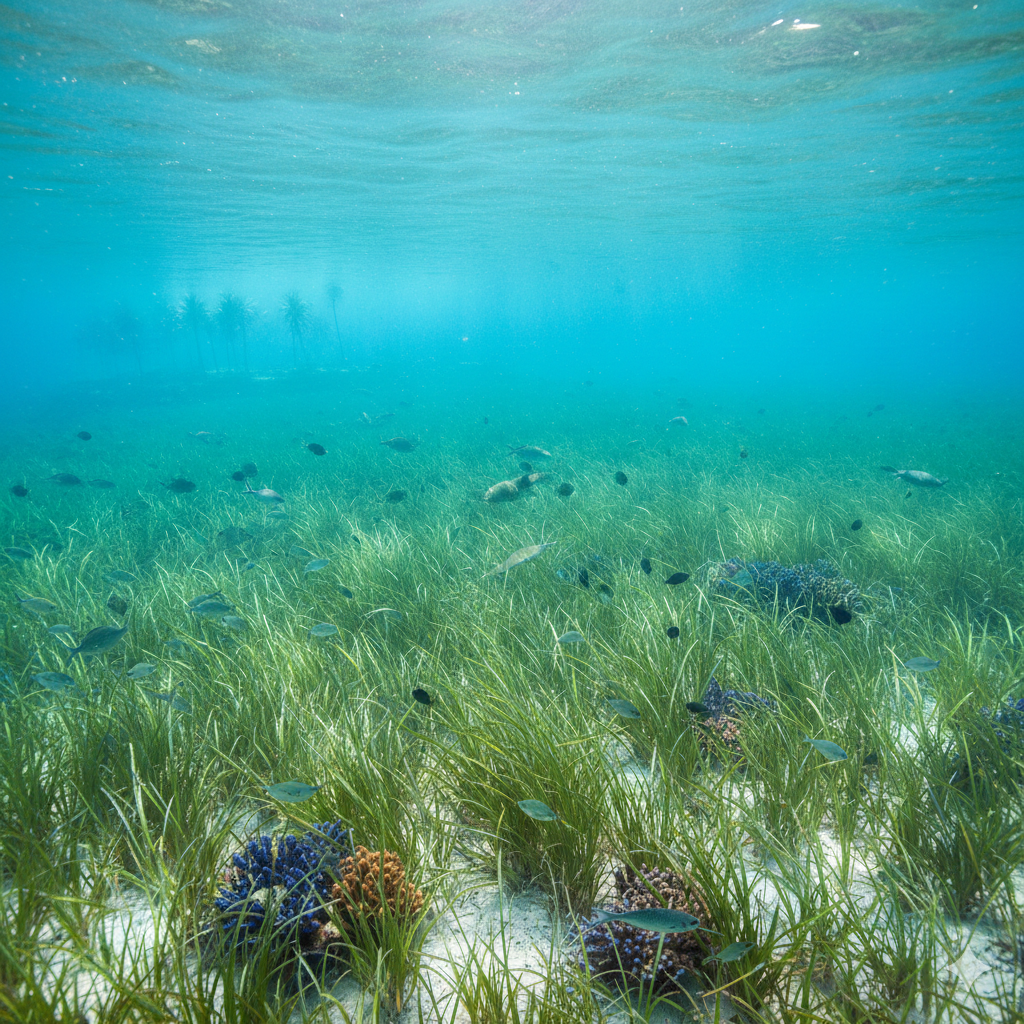
While mangroves and coral reefs often steal the spotlight in marine conservation, a quiet powerhouse thrives beneath the waves: Seagrass Meadows. These underwater gardens are among the most productive ecosystems on Earth, yet they remain one of the least protected. Despite covering less than 0.1% of the total ocean floor, seagrasses are biological giants responsible for capturing up to 18% of the world’s oceanic carbon. As “Blue Carbon” sinks, they are remarkably efficient at fighting climate change, sequestering carbon up to 35 times faster than tropical rainforests.
Unfortunately, we are currently losing these vital habitats at an alarming rate—an area the size of a football field disappears every 30 minutes. This loss is driven by coastal development, pollution, and rising sea temperatures. Protecting seagrass is about more than just preserving habitat for marine life and maintaining healthy fisheries; it is a critical pillar of global climate strategy. To ignore seagrass is to lose one of our most effective tools in fighting climate change from under the waves.
Beyond being a carbon powerhouse, seagrass meadows serve as critical “nurseries” for the ocean’s biodiversity. They provide food and shelter to thousands of marine species, including endangered sea turtles, seahorses, and manatees. For coastal communities, these ecosystems are indispensable; they act as a natural buffer that traps sediment and slows down wave energy, protecting shorelines from erosion and the increasing intensity of storms. By filtering nutrients and contaminants from the water, they also ensure the clarity and health of the surrounding seas, which directly supports the livelihoods of millions of people who depend on fishing and marine tourism.
The restoration of these meadows is a primary focus for AFMESI as we align our efforts with the United Nations Decade on Ecosystem Restoration. Successful conservation requires a collaborative approach that combines local community knowledge with advanced marine technology. By mapping these “blue forests” and implementing sustainable management practices, we can reverse the trend of degradation. Protecting seagrass is not just an environmental obligation; it is an investment in a resilient future where both people and the planet can thrive. As we look toward World Seagrass Day on March 1st, we must commit to protecting these silent heroes to ensure a sustainable blue future.
