
How octopuses stretch the limits with their arms
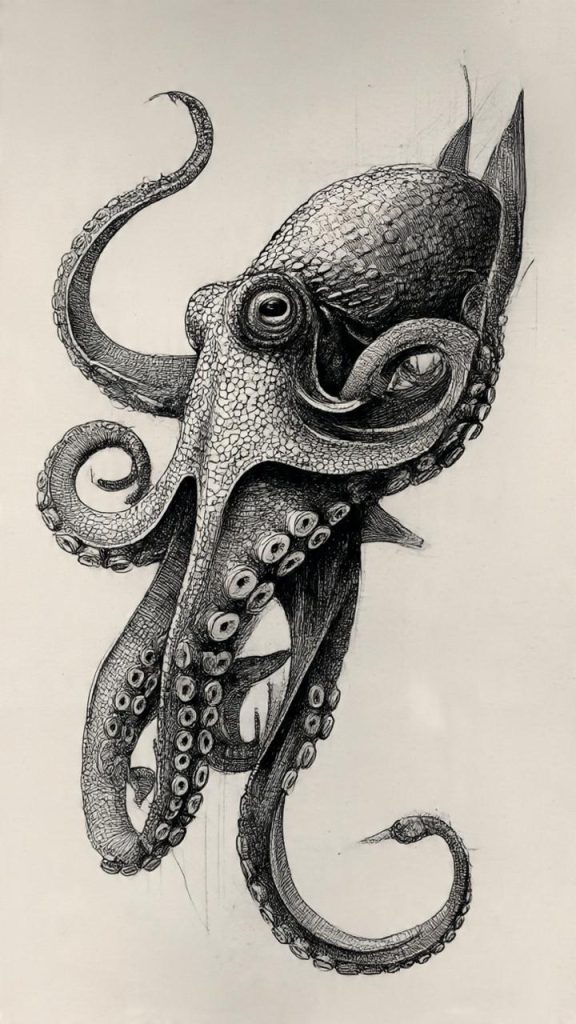
In the quiet, shadowy depths of the ocean, an octopus glides effortlessly across the seafloor, its body a masterclass in fluid motion. Its arms—eight supple, twisting marvels—extend and contract with uncanny precision, curling around jagged rocks, probing hidden crevices, and even mimicking the gait of walking creatures. Each movement is deliberate, graceful, and seemingly effortless. But what gives these boneless limbs such extraordinary control and versatility?
Driven by curiosity, a team of researchers at the University of Queensland embarked on a journey to unravel this mystery. Their investigation led them deep into the microscopic architecture of the octopus’s arms, where they uncovered a remarkable secret: a specialized type of stretchy connective tissue, rich in collagen, that behaves like a biological spring. This tissue allows the arms to stretch, bend, and recoil with astonishing elasticity, enabling the octopus to perform complex tasks—like opening jars, manipulating tools, or navigating tight spaces—without the support of a rigid skeleton.
Through advanced imaging techniques and mechanical testing, the scientists observed how this spring-like tissue stores and releases energy, acting as both a stabilizer and a force amplifier. It provides the perfect balance between flexibility and strength, allowing the octopus to maintain precise control over its movements while adapting to unpredictable environments. In essence, it’s nature’s version of soft robotics—an elegant solution to the challenge of boneless locomotion.
But the implications of this discovery extend far beyond marine biology. The insights gained from studying octopus arms are already inspiring engineers and designers working on the next generation of soft robots—machines that could revolutionize fields from medicine to search-and-rescue. Imagine robotic arms that can delicately grasp fragile objects, navigate through rubble, or assist in minimally invasive surgeries—all modeled after the humble yet extraordinary octopus.
In revealing the secrets of these enigmatic creatures, science is not only deepening our understanding of life beneath the waves but also stretching the boundaries of what technology can become.
